
Mangrove & Vegetation
Sundarbans Mangroves & Vegetation
The Sundarbans is far more than a forest of trees. It is a living mangrove landscape shaped continuously by tides, freshwater flows, salinity, sediment, seasonal rainfall and the interaction between land and water. Its vegetation has evolved to survive in one of the most demanding environments on Earth, creating a distinctive forest community that supports wildlife, stabilizes coastlines and sustains complex ecological processes.
For botanists, ecologists, conservationists, photographers and nature travelers, the vegetation of the Sundarbans offers an exceptional opportunity to understand how plants adapt to tidal wetlands and changing environmental conditions. From salt-tolerant trees and breathing roots to dense creek-side vegetation and regenerating forest, every part of the landscape reveals a different aspect of mangrove ecology.
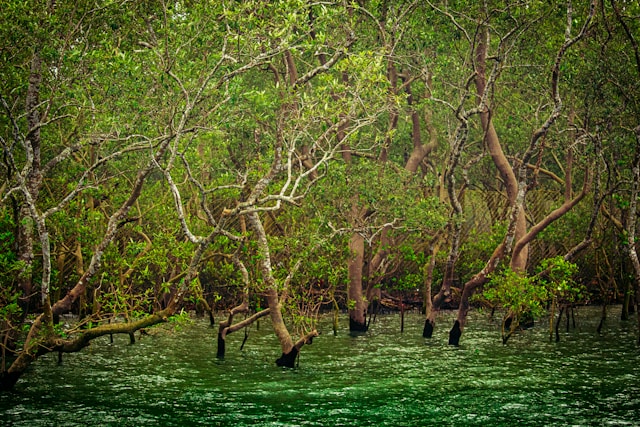
What Makes the Sundarbans a Mangrove Forest?
Mangroves are specialized plants and plant communities adapted to coastal environments where land is periodically influenced by tides, saline or brackish water, waterlogged soils and fluctuating oxygen availability.
The Sundarbans represents one of the world's most extensive and ecologically important mangrove landscapes. Its forest is not a single-species woodland. Instead, it is a complex association of trees, shrubs, herbs, climbers, grasses, aquatic vegetation, algae, fungi and microorganisms distributed across a constantly changing mosaic of rivers, creeks, mudflats, islands and intertidal habitats.
The forest's distinctive character comes from the interaction between vegetation and the tidal environment. Plants must tolerate periods of inundation, limited oxygen in the soil, changing salinity and shifting sediments. As a result, the vegetation of the Sundarbans is highly specialized and closely connected to the physical geography of the forest.
This relationship between plants, water, soil and tides is fundamental to understanding the Sundarbans as an ecosystem.
The Flora of the Sundarbans: A Remarkable Plant Community
The vegetation of the Sundarbans contains a diverse assemblage of mangrove and associated plant species. Among the characteristic trees are species of Heritiera, Excoecaria, Ceriops, Xylocarpus and Avicennia, together with numerous other plants adapted to the tidal environment.
Heritiera fomes, commonly known as sundri, is one of the most characteristic trees of the Bangladesh Sundarbans and has played an important role in the identity of the forest. Other important vegetation includes gewa (Excoecaria agallocha), keora (Sonneratia apetala), baen (Avicennia species), gewa-associated forest communities, and different species of goran (Ceriops).
The composition of vegetation is not uniform throughout the forest. Different species dominate in different environmental conditions. Freshwater influence, salinity, soil characteristics, elevation, tidal inundation and drainage can all influence where particular plant communities develop.
This variation makes the Sundarbans especially valuable for ecological study. A journey through different parts of the forest can reveal noticeable changes in forest structure and vegetation composition even across relatively short distances.
Plant inventories also evolve as scientific research continues. Therefore, species numbers should be understood as documented inventories rather than a permanent final list of every plant occurring across the entire Sundarbans landscape.
How Mangrove Plants Survive Salt, Tides and Waterlogged Soil
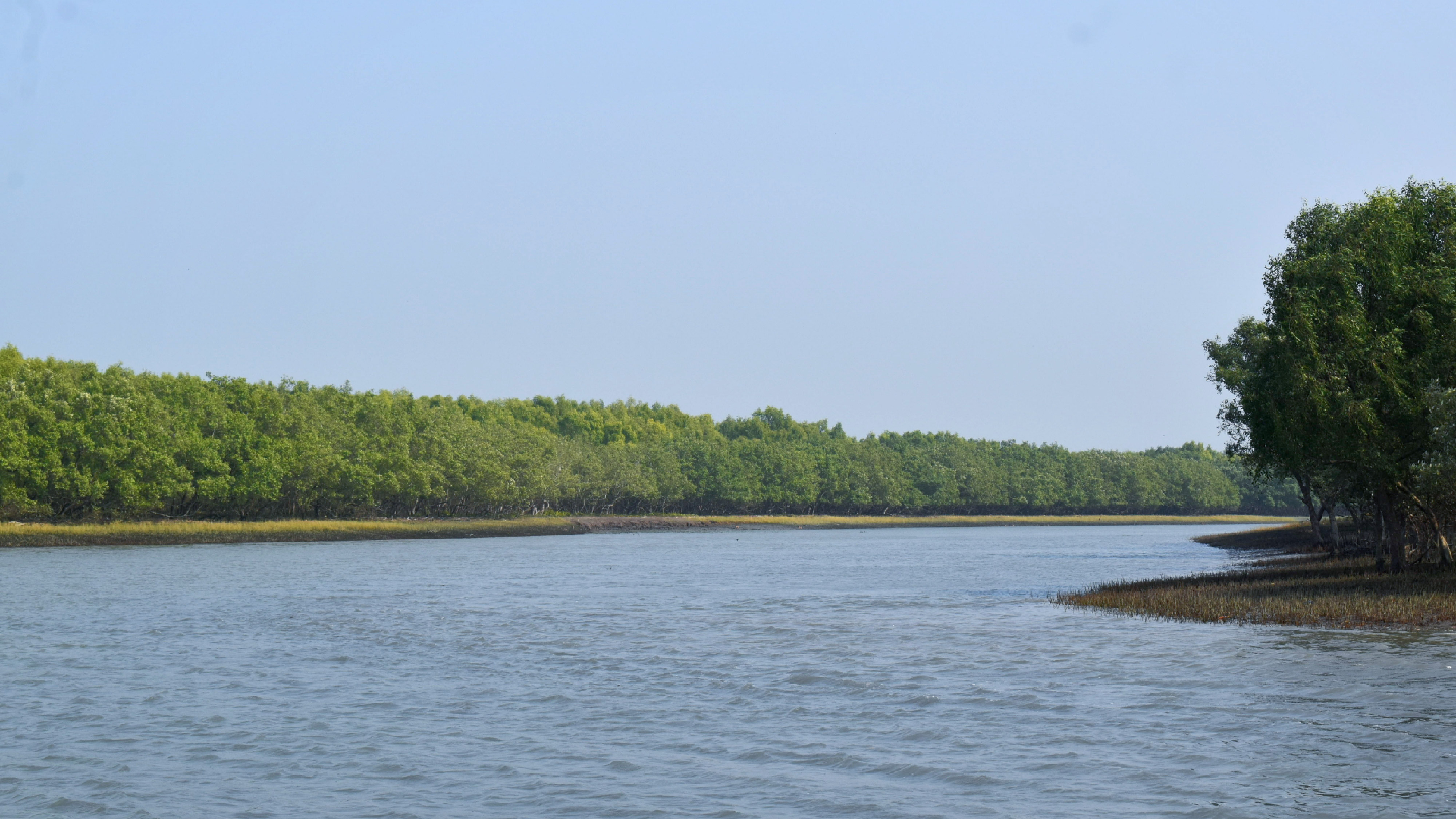
Perhaps the most fascinating feature of Sundarbans vegetation is its ability to survive under environmental conditions that are difficult for most terrestrial plants.
Mangrove plants have developed several remarkable adaptations.
Some species tolerate or regulate salt through physiological mechanisms that allow them to survive in saline or brackish environments. Others are better adapted to areas receiving greater freshwater influence.
Specialized root systems are equally important. In waterlogged soils, oxygen availability around the roots can be extremely limited. Certain mangrove species therefore develop aerial or specialized roots that help facilitate gas exchange.
Depending on the species, these may include structures such as pneumatophores, prop or supporting roots, and other modified root systems.
Mangrove leaves may also have adaptations that reduce water loss and help plants cope with salt stress. Reproductive strategies are equally important, with some mangrove species producing propagules or seeds capable of establishing in challenging intertidal environments.
These adaptations are not simply botanical curiosities. They are the mechanisms that allow the Sundarbans forest to survive, regenerate and function under tidal conditions.
Salinity Shapes the Forest
Salinity is one of the most important environmental factors influencing vegetation patterns in the Sundarbans.
The Bangladesh Sundarbans receives freshwater from rivers and channels as well as saline influence from the Bay of Bengal through the tidal network. The balance between freshwater and saline water varies spatially and seasonally.
As salinity changes, the competitive advantage of different plant species can also change. Some species are more tolerant of saline conditions, while others perform better where freshwater influence is stronger.
This helps explain why the vegetation is not identical throughout the forest.
Changes in freshwater flow, sea-level conditions, tidal processes, rainfall and coastal dynamics can therefore influence the long-term composition and structure of mangrove vegetation.
For researchers, this makes the Sundarbans a valuable natural laboratory for studying plant adaptation, salinity gradients, ecological change and climate-related pressures on coastal forests.
Mangrove Vegetation and the Life of the Forest
Mangrove plants form the structural foundation of the Sundarbans ecosystem.
Leaves, branches, roots and fallen plant material contribute organic matter to the forest and surrounding waterways. As vegetation breaks down, microorganisms and detritivores help transform plant material into nutrients that can move through the wider food web.
The roots also create physical complexity in shallow waters and muddy environments, providing shelter and nursery habitat for numerous aquatic organisms.
Fish, shrimp, crabs, mollusks and other organisms are closely connected to these mangrove environments. In turn, aquatic organisms become part of the diets of larger predators, while birds, reptiles and mammals interact with vegetation and the habitats created by it.
The result is a highly interconnected system in which the forest is not separate from the rivers and creeks. The vegetation, tidal water, sediments and wildlife function together.
For visitors, this means that observing a mangrove tree is only the beginning. Beneath and around the vegetation is a much larger ecological story involving nutrient cycling, aquatic life, microorganisms and wildlife.
Mangroves as Coastal Protection and Blue Carbon Ecosystems
The importance of Sundarbans vegetation extends well beyond its biodiversity.
Mangrove forests can reduce wave energy, trap sediments, stabilize shorelines and help protect coastal landscapes from the effects of storms and tidal processes. Their dense root systems contribute to the retention and accumulation of sediments, while the forest itself forms a natural interface between land and sea.
Mangroves are also important blue-carbon ecosystems. Carbon is stored in living biomass as well as in soils and sediments, where organic material can accumulate over long periods.
The Sundarbans therefore has global significance in discussions about climate change, coastal resilience and nature-based solutions.
Protecting mangrove vegetation is consequently not only about protecting trees. It is also about maintaining carbon storage, coastal stability, biodiversity and ecological processes that benefit both wildlife and human communities.
Threats to Sundarbans Vegetation and the Need for Conservation
The vegetation of the Sundarbans is resilient, but it is not immune to environmental change.
Salinity changes, reduced freshwater influence, erosion and accretion, changing sediment dynamics, sea-level rise, extreme weather events, pollution and other human pressures can influence forest structure and plant regeneration.
Scientific research has also identified changes in the distribution and relative dominance of important tree species. In some areas, increasing salinity can favor more salt-tolerant vegetation while placing greater pressure on species that are less tolerant of saline conditions.
Conservation therefore needs to protect ecological processes rather than focusing only on individual tree species.
Effective protection includes maintaining the integrity of the protected forest, conserving waterways and habitats, supporting scientific monitoring, reducing pollution, protecting regeneration areas and strengthening responsible management of tourism and other activities.
The long-term future of the Sundarbans depends on maintaining the relationship between freshwater, tides, sediment, soil, vegetation and wildlife.
Why the Sundarbans Is an Exceptional Destination for Botanical and Ecological Research
For scientists and researchers, the Sundarbans offers an extraordinary field environment.
Its vegetation provides opportunities to study mangrove ecology, plant adaptation, salinity gradients, forest structure, regeneration, carbon storage, nutrient cycling, climate resilience, coastal ecology and interactions between terrestrial and aquatic systems.
Researchers can also observe how vegetation changes across different habitats and environmental conditions. The relationship between mangrove plants and tidal waterways makes the forest particularly valuable for interdisciplinary research combining botany, ecology, hydrology, climate science, conservation biology and coastal studies.
For international visitors, the forest also provides a rare opportunity to experience these ecological processes directly. Responsible field observation, photography, birdwatching and guided exploration can turn a journey into a meaningful learning experience while minimizing disturbance to the forest.
At Iconic Ecotourism, we believe that experiencing the Sundarbans begins with understanding it. Whether the purpose is scientific research, ecological learning, nature photography, birdwatching or responsible exploration, the mangrove vegetation provides one of the most compelling ways to understand the living character of this extraordinary forest.
Frequently Asked Questions
a) What are the main plants found in the Sundarbans?
The Sundarbans contains a diverse mangrove plant community. Important and characteristic species include sundri (Heritiera fomes), gewa (Excoecaria agallocha), keora (Sonneratia apetala), baen (Avicennia species) and goran (Ceriops species), along with many other associated plants. The exact composition varies according to salinity, freshwater influence, soil, elevation and tidal conditions.
b) How do mangrove plants survive in the Sundarbans?
Mangrove plants have specialized adaptations for saline water, tidal flooding and oxygen-poor soils. These adaptations can include salt tolerance or regulation, specialized aerial roots, water-conserving leaves and reproductive strategies suited to intertidal environments. These features allow mangroves to survive where many ordinary terrestrial plants could not.
c) Why is the vegetation of the Sundarbans important for wildlife?
Mangrove vegetation provides food, shelter, breeding and nursery habitats for many organisms. Fallen leaves and other plant material contribute to nutrient cycling, while roots and waterways create habitats for fish, shrimp, crabs and other aquatic organisms. The resulting food web supports birds, reptiles, mammals and major predators of the Sundarbans.
d) Is the Sundarbans suitable for botanical or ecological research?
Yes. The Sundarbans is an exceptionally valuable natural field laboratory for research on mangrove ecology, plant adaptation, salinity, regeneration, biodiversity, carbon storage, nutrient cycling, coastal processes and climate resilience. Researchers should, however, follow applicable permissions, protected-area regulations and responsible field practices.
e) Why is mangrove conservation important for the future of the Sundarbans?
Mangrove conservation protects much more than vegetation. Healthy mangroves support biodiversity, store carbon, contribute to nutrient cycling, stabilize sediments and shorelines, and provide essential habitat for wildlife. Protecting the forest's ecological processes is therefore essential for both biodiversity conservation and long-term coastal resilience.
Explore the Sundarbans Experience with Iconic Ecotourism
The Sundarbans is a forest best understood through careful observation—where every mangrove root, tidal creek, leaf, bird and changing waterline forms part of a much larger ecological system. Whether you are an international nature traveler, wildlife photographer, birdwatcher, conservation enthusiast, student or researcher, Iconic Ecotourism can help you experience the Sundarbans through responsible, informative and nature-focused journeys.
Plan Your Mangrove Expedetion here